The fork usually arrives in the same shape. A clinic or agency has one WhatsApp Business number, three or four people answering it through a shared inbox, and a backlog that has stopped being embarrassing and started being expensive. The owner sits down to weigh a fifth hire against a better system, and the honest answer depends entirely on a question nobody has asked yet: is the current chaos a volume problem or a routing problem?
Almost always it is routing. Four agents staring at one queue is not a staffing shortage, it is an allocation failure, and adding a fifth person to an unallocated queue produces five people duplicating replies instead of four. Before you sign an offer letter, spend a week deciding who gets which chat and why. That decision set is what this article is about.
What multi-agent WhatsApp inbox routing rules actually are
Multi-agent WhatsApp inbox routing rules are the conditions that decide which agent or bot receives an incoming conversation on a shared WhatsApp Business API number, evaluated the moment a message lands. Meta's developer documentation describes the WhatsApp Business Platform as a programmatic messaging API, and that is what removes the consumer app's device limit: any number of agents can work one number concurrently, while chat distribution, transfers, and supervision come from the shared-inbox software you connect to the API. In practice a working ruleset combines seven patterns: keyword, load-based, skill-based, escalation-tier, time-window, VIP-flag, and fallback, applied in that priority order.

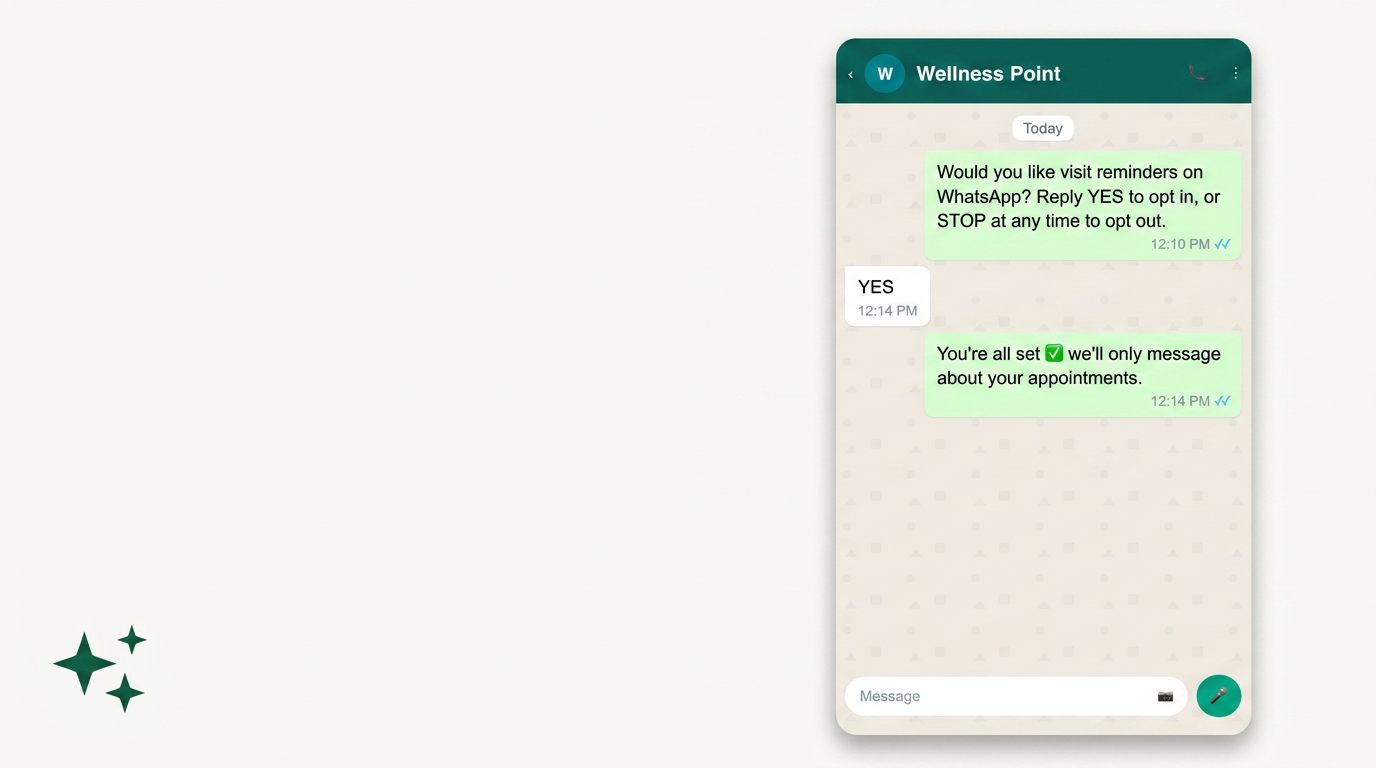
One thing to settle before any of it: routing does not create permission to message. Meta's opt-in requirements still govern who you may proactively contact, and the documentation is explicit that businesses must obtain opt-in permission before messaging people, with the opt-in naming the business. No clever rule tree changes that. Routing decides where an inbound conversation lands and who may reply inside the service window. Everything outbound remains a consent question first.
Mapping the conversations you already get before you write a single rule
Every bad routing build we have been called in to fix started the same way, with someone opening the rules panel on day one. You cannot allocate what you have not counted. Pull the last thirty days of conversations off the number and sort them by what the customer actually wanted in the first message, not by what the thread eventually became.
Most service businesses end up with a short list: book, reschedule or cancel, price question, location and hours, an existing-order or existing-case question, a complaint, and a supplier or recruiter message that has no business being in the customer queue at all. That last category is bigger than owners expect and it is free capacity the moment you route it away.
The intent taxonomy is the whole build
Write your taxonomy down as a flat list with a one-line definition each, and force every one of the thirty days' conversations into exactly one bucket. If a conversation genuinely fits two, your definitions are wrong, not the conversation. We hold clients to a maximum of eight intents on the first build. Eight is enough to route cleanly and few enough that a human can hold the whole tree in their head when something misfires at 6pm on a Thursday.
Deciding what a bot handles versus what a person handles
The split we use: anything with one correct answer that does not change per customer goes to the bot. Hours, location, parking, price list, document checklist, appointment availability. Anything requiring judgement, negotiation, or an apology goes to a person. This is the same instinct as our position that you should build custom only when the workflow is your competitive advantage, and buy or configure everything else. Your senior consultant answering "where are you located" for the ninth time today is the most expensive answer in the business.
Writing the seven rules in the order they must fire
Order matters more than the rules themselves. Routing logic is evaluated top to bottom and the first match wins, so a badly ordered ruleset with perfect rules behaves worse than a well ordered ruleset with rough ones.
Keyword and intent matching, the first filter
The top of the tree reads the message content and assigns an intent. Keyword matching is the crude version and still works surprisingly well for booking language, but intent classification handles the customer who writes "can I come tomorrow around 4" without using any of your keywords. Route each intent to a named destination: a queue, a specific skill group, or a bot flow.
The trap here is over-matching. A rule that catches the word "price" will pull in "I already paid the price, this is unacceptable", which is a complaint and should never reach the sales queue. Test your keyword rules against the angriest thirty messages in your history before you go live.
Load balancing so no agent becomes the bottleneck
Once the intent is known, decide who inside that group gets it. Round-robin is the default and it is fine until one agent has eleven open chats and another has two, because round-robin counts assignments, not workload. Load-based assignment counts open conversations and gives the next chat to whoever has the fewest.
Think of a squad with a fixed number of substitutions. A manager does not push every attack down the same flank because it worked once; the flank tires, the opposition adjusts, and the shape collapses. Distribution across the whole pitch is what keeps the team functional in the last twenty minutes. Same with an inbox at 5pm.
Skill-based routing, and how narrow to make each skill
Skill groups map agents to intents they are competent to close. In a clinic that might be a treatment-coordination group and a billing-and-insurance group. In a real estate agency it is usually by community or by lease versus sale.
Keep groups at two members minimum. A single-member skill group is a routing rule with a built-in single point of failure, and the day that person takes leave you discover it in the worst possible way. If you genuinely only have one person who can handle insurance queries, the skill group is really an escalation tier, so define it as one.
Escalation tiers with explicit triggers
Tier one is your bot and front-line agents. Tier two is the person who can override a policy. Escalation must fire on defined conditions, not on vibes: a customer asks for a manager, sentiment turns, the same conversation has bounced twice without resolution, or a refund above a set amount is requested.
Managers on a shared inbox built on the WhatsApp Business API can monitor live conversations, step into a thread, and transfer it; the API carries the messages while the inbox software provides the oversight. That means escalation does not have to mean handing the customer a new number or asking them to repeat themselves. Configure the escalation so the full history travels with the transfer. A tier-two agent reading a conversation cold will ask the customer to explain again, and that is the moment the experience feels worse than the problem.
Time-window rules and the honest after-hours reply
Outside business hours, route to the bot with an explicit statement of when a human will reply, then queue the conversation for the opening shift rather than closing it. The failure we see constantly is an after-hours auto-reply that says nothing useful and a morning queue that starts at zero because nobody assigned the overnight backlog.
Time windows also need a Friday rule in the UAE, a Ramadan-hours rule for many of our clients, and a public-holiday override that someone actually remembers to switch on. Put the holiday calendar in the system, not in a person's head.
VIP flags read from the CRM, not from memory
A VIP rule pulls a customer attribute from your CRM at the moment the message arrives and routes accordingly: existing high-value client to their named account handler, a patient mid-treatment-plan to their coordinator, a landlord with four units to the senior agent. This rule sits above load balancing, because balance is irrelevant when continuity is the point.
This only works if the CRM is the source of truth and the phone number is the join key. If your agents keep VIP status in their own contact lists, the rule cannot fire. That data hygiene question is part of the broader zero-trust implementation path we walk clients through before any routing goes live.
The fallback that catches everything you did not predict
Every ruleset needs a final catch-all that assigns unmatched conversations to a named human queue with a response deadline. Not to a bot loop. Not to "unassigned". The fallback queue is also your best product feedback: whatever keeps landing there is an intent you failed to define, and reviewing it weekly is how the taxonomy improves.
The same reschedule, run twice
Here is one workflow traced end to end, first as most of our clients run it before we touch anything, then as it runs with the seven rules in place. The scenario is composite, drawn from patterns across several clinic and salon installs rather than one account, and the timings are illustrative of shape, not measured results.
How it runs manually today
A patient messages at 8:47am asking to move Thursday's appointment. The message lands in a shared inbox. Two agents see it; one is mid-call, one assumes the other has it. At 9:20 someone opens it, does not know who the patient is, and scrolls up. The thread has three previous conversations from different agents with no notes. The agent opens the practice management system in another tab, searches by phone number, gets two records because the patient once registered with a different spelling. She picks one, finds Thursday 3pm, checks availability for the requested new time, and it is taken. She replies with three alternatives at 9:38.
The patient, now at work, replies at 1:15pm choosing the second option. The original agent is at lunch. Nobody else picks it up because it looks assigned. At 3:40 she returns, books it, and forgets to cancel the original slot in the calendar. Thursday 3pm sits empty and nobody notices until Thursday 3pm. That empty slot is the entire margin of the appointments either side of it.
How it runs with routing rules doing the work
The same message at 8:47am. Intent matching reads reschedule language and tags the conversation. The VIP rule checks the CRM by phone number, finds an active treatment plan, and routes to the assigned coordinator's skill group rather than the general queue. Because the coordinator has seven open chats and her groupmate has two, load balancing assigns it to the groupmate with the treatment history and previous thread notes attached to the conversation.
The bot has already replied within seconds with the patient's current appointment details pulled from the calendar and the three nearest available slots, because availability is a single-correct-answer question. The patient picks one at 8:49. The booking writes back to the calendar, releasing Thursday 3pm automatically, and the freed slot enters the waitlist flow. The human coordinator sees a resolved conversation in her queue, glances at it, and moves on. Nothing needed her.
The delta is not speed, it is the two silent failures that never happen: the unclaimed conversation and the uncancelled slot. This is why we keep saying that reducing no-shows and dead slots is the fastest ROI in appointment automation: a systematic review in the Journal of Telemedicine and Telecare, covering 29 studies, found appointment reminders cut non-attendance by a weighted mean of 34 per cent relative to baseline, with automated reminders alone achieving a 29 per cent relative reduction. The reminder sequence gets the credit, but a meaningful share of the recovered revenue comes from the calendar write-back nobody sees. We covered the wider version of this in our piece on eliminating scheduling chaos.
Setting the guardrails that stop rules from fighting each other
Seven rules will conflict. A VIP with an after-hours complaint matches three of them at once, and what happens next should be a decision you made in advance, not an accident of configuration order.
- Conflict precedence: escalation beats VIP, VIP beats skill, skill beats load, load beats round-robin, and fallback catches the rest. Write this down where the person maintaining the system can see it.
- Reassignment timers: any conversation untouched for a set period returns to its queue automatically. Without this, an agent who goes home with eleven open chats takes them home too.
- Transfer notes required: no transfer without a one-line reason. This costs the sending agent four seconds and saves the receiving agent a full re-read.
- Bot handover on the second failure: if the bot cannot resolve a query twice, it hands to a human and says so clearly. WhatsApp's Business Messaging Policy requires prompt, clear and direct escalation paths to a human alongside any automation, so this handover is a compliance requirement as much as a courtesy. Three attempts is one too many and customers tell you so.
- One owner for the ruleset: your inbox platform's owner or admin role controls rules and permissions, so name one person as that admin. Rules edited by committee drift within a month.
The compliance line that routing must not cross
Routing governs inbound conversations. It does not grant you permission to open new ones. Meta's pricing documentation is clear on the mechanics: a customer's message opens a 24-hour service window, non-template replies inside it are free, and any proactive message outside that window requires an approved template and a documented opt-in under Meta's rules. A routing rule that quietly triggers outbound messages to a segment is a policy violation dressed up as automation. We build the opt-in record into the CRM as a field with a timestamp and a source, so any agent can see, in the conversation, whether this person consented and when.
Verifying the routing works before you trust it with customers
Do not launch on a Monday morning with live volume. Run a structured test first, then a shadow week, then full cutover.
The structured test is simple and tedious. Write one test message per intent, plus one per conflict case (VIP after hours, complaint containing the word price, escalation from a skill group with one member on leave), and send them all from real phone numbers. Log where each one landed and how long it took. Anything that lands in fallback is a rule you have not finished writing.
The four numbers worth watching in week one
Meta's Business Management API gives you conversation-level reporting per number, and four metrics tell you whether the routing is doing its job. First-response time by intent, because a rising number in one intent points at one bad rule rather than a busy team. Reassignment rate, because chats that bounce twice mean your skill groups are wrong. Fallback volume as a share of total, which should shrink weekly. And unresolved-at-close-of-day count, which should be a queue with owners' names on it, never a pile.
If reassignment rate stays high after two weeks, the problem is almost never the software. The usual culprit is an intent taxonomy that describes how the business is organised on paper instead of how customers actually ask for things. Rewrite the taxonomy from the fallback queue and re-run the structured test.
Reading the analytics like a manager reads minutes played
A squad manager does not judge a season on goals alone; minutes played, distance covered and who was on the pitch when things went wrong tell the real story. Your inbox analytics work the same way. An agent with the highest closed-chat count may simply be receiving the easy intents, while the one closing fewer is absorbing every complaint escalation. Route allocation and performance review are the same conversation, and if you only look at volume you will promote the wrong person. We go deeper on turning this kind of operational data into decisions in our operator's guide to AI systems.
Questions teams ask us
Can multiple agents use one WhatsApp Business number at the same time?
Yes. The WhatsApp Business API places no limit on how many agents work one number, and inbox platforms built on it add automatic chat distribution, transfers, and manager oversight. The free WhatsApp Business app does not do this properly, which is why teams outgrow it.
How many routing rules should a small team start with?
Start with keyword or intent matching, load balancing, a time window, and a fallback, which is four rules and covers most of the chaos. Add skill groups, escalation tiers and VIP flags once you have thirty days of data showing where the four are failing.
What happens to a conversation when an agent goes on leave?
A reassignment timer should return any untouched conversation to its queue automatically, and skill groups should never have a single member. If both are configured, an agent's absence changes nothing the customer can see.
Do routing rules affect WhatsApp opt-in compliance?
No. Routing decides who answers an inbound conversation, while Meta's opt-in requirements govern which proactive messages you may send and under which approved template. Keep the two separate in your build or you will eventually breach one while configuring the other.
Where to start this week
Pull your last thirty days of WhatsApp conversations, sort them by first-message intent, and count how many landed with nobody assigned; that number alone will tell you whether you need a hire or a ruleset. We are Learnmind, and we install AI communication systems for UAE service businesses. If you want a second opinion before you build anything, write down your current setup in a few lines, who answers the number, which tools sit on it, and how chats get assigned today, and send it to hello@learnmind.ai. We will take a free look and tell you which of the seven rules would pay for itself first.