Most WhatsApp automation projects fail not because the bot is bad, but because the bot is the only thing that got built. A business spends weeks designing a clever conversational flow, launches it, watches initial engagement look promising, and then quietly discovers that the leads who don't convert in the first exchange simply vanish. Nobody built the machinery to bring them back. The chatbot was never the hard part. The follow-up architecture around it is.
This matters because WhatsApp's entire value proposition for lead conversion rests on something the channel does uniquely well: it keeps a conversation warm without feeling like a sales sequence. Email follow-ups read as marketing. SMS feels transactional. A WhatsApp message, when done with any restraint, reads like a person picking up a thread. That's a genuinely different psychological starting point, and it's the reason WhatsApp Business API deployments can outperform other channels on response rates — but only when the automation behind them is built to exploit that advantage rather than waste it on a single scripted greeting.
Why the First Message Is the Least Important One
Businesses tend to pour their design effort into the opening exchange: the welcome message, the menu of options, the initial qualifying questions. This is understandable — it's the part prospects see first, and it's the part that gets demoed to stakeholders. But the opening exchange is also the moment when a prospect is most likely to respond regardless of how well it's built, because they just took an action (clicked an ad, filled a form, scanned a code) and their intent is at its peak.
The conversion battle is actually won or lost later: at hour six when the prospect hasn't replied, at day two when they've gone quiet after asking about pricing, at day seven when they said "let me think about it." Businesses that automate only the front door and leave everything after that to manual follow-up (which, in practice, often means no follow-up at all) are leaving the majority of their pipeline on the table. A logistics company selling warehouse space and a dental clinic booking consultations have almost nothing in common operationally, but they share this exact failure pattern: strong opening automation, near-total silence after message three.
Designing Follow-Up Sequences That Don't Feel Like Follow-Up Sequences
The mechanics of a good WhatsApp follow-up sequence are less about message volume and more about timing and framing. A sequence that fires a reminder every 24 hours regardless of context reads as automated within the first two messages, and once a prospect senses they're talking to a script that isn't listening, engagement collapses. The fix isn't to hide that it's automated — most people now assume a business's WhatsApp is at least partly bot-driven — it's to make sure each message carries new information or a genuine reason to respond.
Some patterns that hold up in practice:
- Vary the ask, not just the wording. If the first follow-up asks "still interested?", the second shouldn't ask a version of the same question. It should offer something new — a shorter path (a direct booking link instead of another question), social proof, or an answer to an objection the bot can reasonably infer from where the conversation stalled.
- Let silence be informative. A prospect who read a message but didn't reply is in a different state than one who never opened it. WhatsApp's read receipts make this distinguishable, and the follow-up cadence should branch on it — a "seen but ignored" lead often responds better to a more direct, shorter nudge, while an unopened message might just need a resend at a different time of day.
- Cap it, visibly. A sequence that runs for three weeks with no end in sight trains prospects to ignore it. A final message that signals "this is the last one" (e.g., "I'll close this out unless I hear back") tends to produce a disproportionate share of replies precisely because it removes the assumption that ignoring it costs nothing.
None of this requires exotic AI. A rules-based sequence with three or four well-timed branches, built on read-status and reply-content triggers, will outperform a single generic reminder loop almost every time. The sophistication that actually matters is in the branching logic, not the language model behind it.
The Handoff Problem Nobody Designs For
Automation should qualify and warm a lead; it should not try to close every deal itself. The businesses that get the most value from WhatsApp automation are the ones that treat the bot as a triage layer, not a replacement for a human closer. The failure mode here runs in both directions. Some businesses hand off too early — routing every reply to a human, which defeats the point of automating in the first place and buries the sales team in low-intent chatter. Others hand off too late, keeping a genuinely ready buyer stuck in an automated loop past the point where they wanted to speak to a person, which is often the moment a deal quietly dies.
A cleaner approach sets explicit handoff triggers: specific phrases ("can I speak to someone", "call me"), specific actions (clicking a pricing link twice), or specific data points (a budget or timeline answer that clears a threshold). When one of these fires, the conversation should route to a human within the platform, with the full chat history attached, and — critically — without the prospect having to repeat themselves. Losing that context at the handoff is one of the most common ways businesses undo the goodwill the automation just built.
What to Automate Beyond the Initial Chat
Lead capture and qualification get most of the attention, but some of the highest-leverage automation happens well outside the "chatbot" frame most people picture:
- Appointment and order reminders sent as proactive template messages, which reduce no-shows and abandoned carts without requiring the recipient to initiate anything.
- Post-purchase or post-consultation check-ins that open the door to reviews, referrals, or upsells at the moment satisfaction is highest.
- Re-engagement pushes to dormant leads — people who entered the pipeline months ago and never converted, who are often cheaper to reactivate via a well-timed WhatsApp message than to acquire fresh through paid channels.
These sit outside the "conversion" conversation in most people's mental model, but they compound. A retail brand automating cart-abandonment nudges through WhatsApp and a B2B services firm automating quarterly check-ins with dormant prospects are running the same play: using the channel's high open rates to recover value that would otherwise require a human to remember and act on manually.
Measuring ROI Without Fooling Yourself
The instinct is to measure success by response rate or messages sent, but those are activity metrics, not outcome metrics. The number that matters is revenue attributable to conversations that would not have happened, or would have happened later and smaller, without the automation — plus the operational cost saved by not having a human handle repetitive early-stage exchanges. Getting a clean read on this requires tagging leads by source and automation stage from day one, because retrofitting attribution after a few months of messy data is close to impossible.
A useful discipline is tracking conversion rate at each branch point of the sequence, not just at the top and bottom. If a particular follow-up message consistently produces a spike in replies, that's a message pattern worth reusing elsewhere. If a branch consistently produces silence, it's not a sign to send it more aggressively — it's a sign the framing is wrong and needs rewriting, not repeating.
It's also worth being honest that automation savings and automation revenue pull in different directions when justifying the investment to a skeptical owner. Operational savings (fewer hours spent on manual first-touch replies) are easier to quantify and defend, but revenue lift is the bigger number if the sequence is built well. Businesses that only report the savings side tend to underestimate the case for expanding the program.
Where This Breaks Down
Automation built without a plan for volume tends to fail quietly at scale. A sequence that reads as personal at fifty conversations a day can start collapsing at five hundred, particularly if human agents are the bottleneck at handoff and response times stretch out. WhatsApp's advantage is immediacy; a slow human reply after a fast automated one is a worse experience than no automation at all, because it sets an expectation the business then fails to meet.
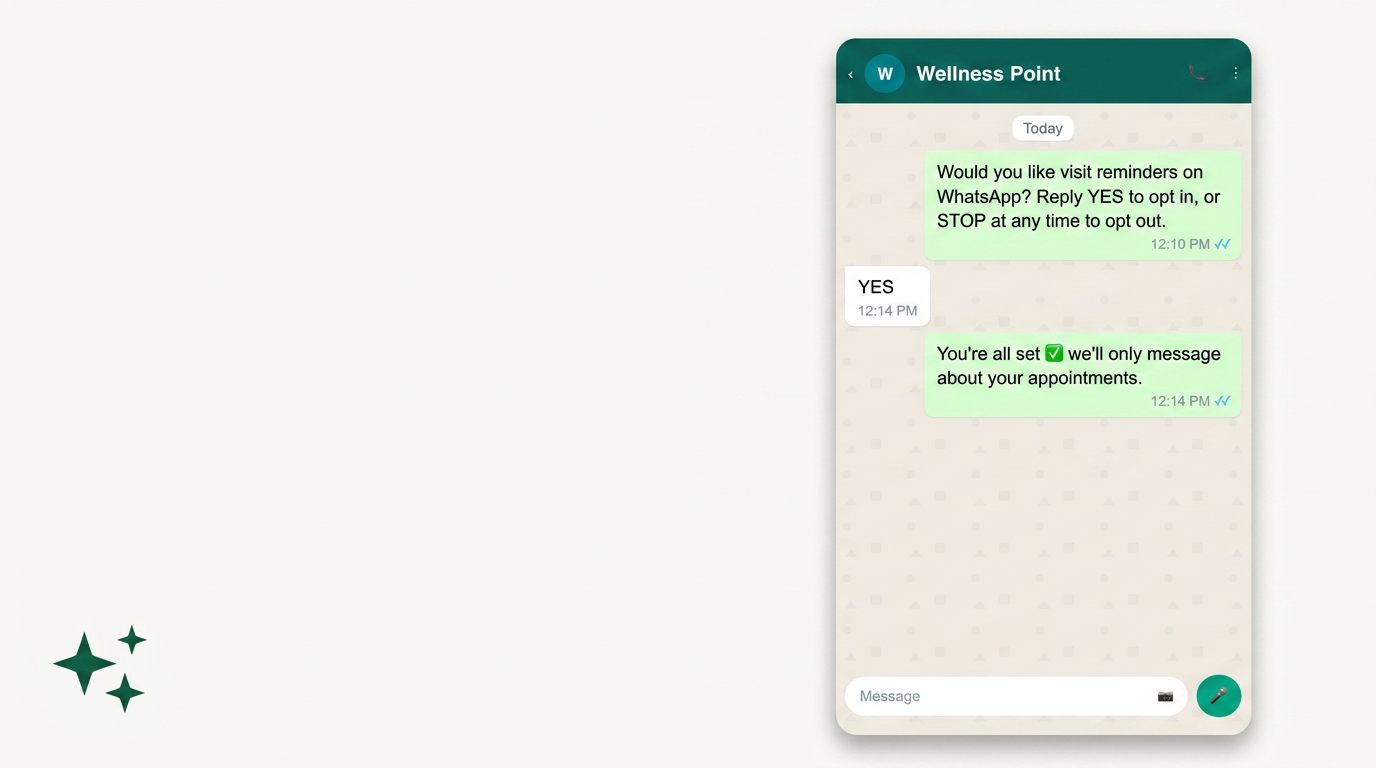
There's also a compliance dimension that's easy to underweight. WhatsApp's messaging policies around opt-in and template categorization aren't just bureaucratic friction — violating them can get a business number restricted, which, for a company that has built its lead pipeline around WhatsApp, is closer to an operational outage than a minor setback. Building consent capture properly at the point of lead entry is unglamorous work, but it's the difference between a channel that scales and one that gets shut off at the worst possible moment.
The Actual Point of All This
The strongest argument for investing in WhatsApp automation isn't that the technology is impressive — it's that the channel matches how people already communicate, which means the automation built on top of it gets used rather than ignored. A sophisticated chatbot on a channel customers avoid checking will always underperform a simple, well-timed sequence on the channel they check dozens of times a day. That's the underlying logic worth keeping in view when the temptation arises to build something more elaborate than the business actually needs: the best automation for a given business is the one its customers will actually respond to, on the channel they're already paying attention to.