It is late afternoon on a Tuesday and the practice manager is standing behind the front desk looking at tomorrow's schedule board with empty hygiene slots on it. The hygienists are on salary whether those chairs fill or not. The clinic has spent the month on paid ads for whitening, and the ads are working in the narrow sense that the phone rings, except the callers want price quotes and a good share of them never arrive. Twenty feet away, on the reception computer, the practice management software holds thousands of patient records. Many of those people have sat in that chair, know the dentist by name, and have not been back in over a year.
That gap is the whole story of dental marketing in this market. The clinic is paying to find strangers while sitting on a list of people who already trust it. This article is about closing that gap on WhatsApp, and about the situations where you should not try.
A note on what follows. The clinic described here is an illustrative composite of the UAE healthcare and service clients we run reactivation projects for, and the only hard figures quoted below are ones we can cite.
What a dormant patient list is quietly costing
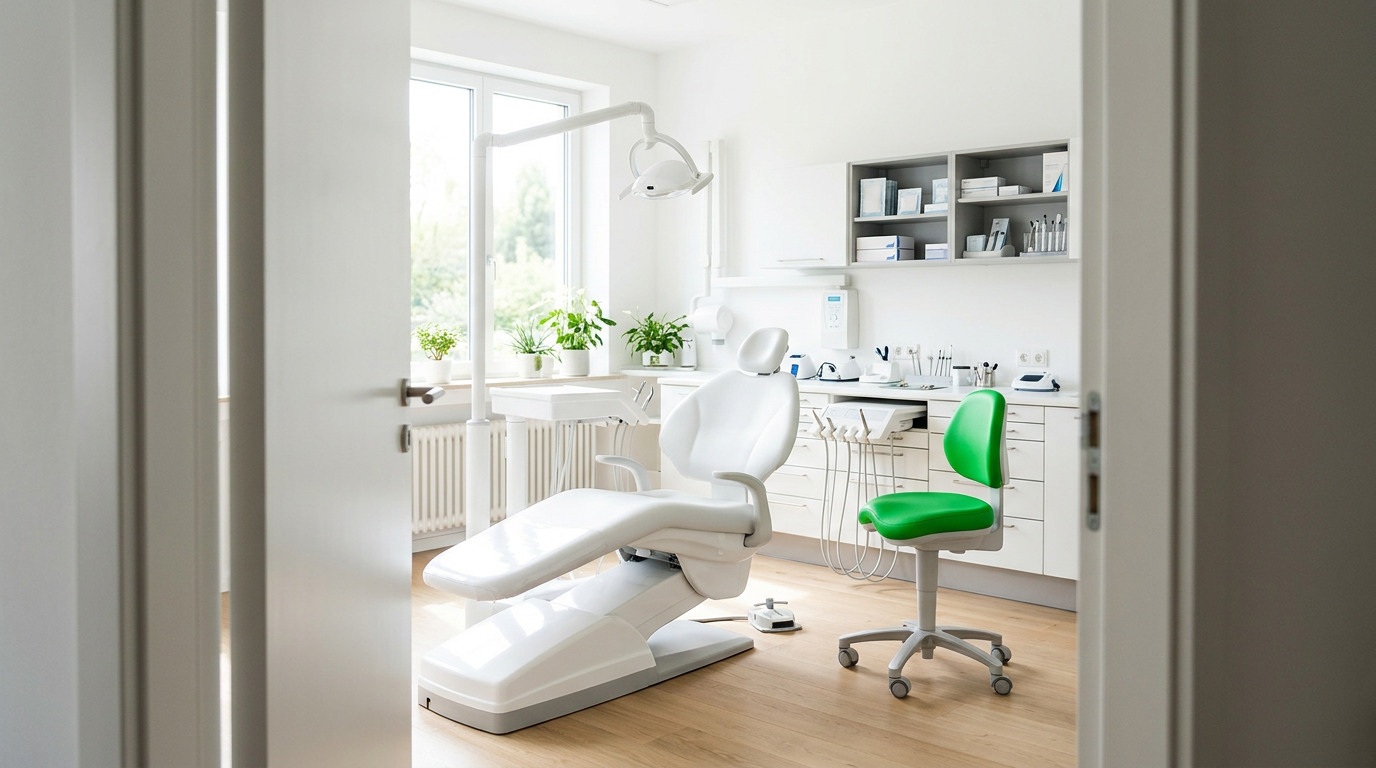
The practice is a multi-chair general and cosmetic clinic in a mixed residential and office area of Dubai, the kind that fills on weekday evenings and sits half empty at 11am. Its cost per new patient through paid channels is high enough that marketing has become a treadmill: stop spending, stop booking. Its recall system exists on paper. In practice that means a receptionist phoning overdue patients between walk-ins, leaving voicemails nobody returns, and ticking the record as contacted.
Here is what operators underestimate. A dormant patient is not a lost patient. They are a patient with a stalled appointment. Nothing about their trust in the clinician changed. Life happened: a move to another community, a summer back home, a baby, a job change, an insurance switch, one rescheduled cleaning that quietly became eleven months. The relationship usually survives the lapse; the follow-up is what failed, and follow-up failure is a systems problem.
There is a channel problem underneath it too, and most clinics have not named it. Recall goes out by phone and email while patients live on WhatsApp. Across our UAE client work the same pattern repeats: the resident who lets three voicemails from an unrecognised landline go unanswered replies to a WhatsApp message the same afternoon. That is observed client behaviour rather than a population statistic, but it repeats often enough that we treat WhatsApp as the primary recall channel for a Dubai service business, and a clinic phoning its way through the list is working against its patients' habits.
WhatsApp database reactivation for a dental practice, defined
WhatsApp database reactivation for a dental practice is a structured outreach sequence sent through the WhatsApp Business API to patients who have not booked within a defined window, segmented by treatment history and length of lapse, with replies handled in-chat until the patient is on the schedule. A broadcast blast fails every part of that definition. Run properly, campaigns of this kind bring back a meaningful minority of a lapsed list at a cost per booking well below new-patient acquisition, and the economics rest on a cost gap Harvard Business Review has quantified: acquiring a new customer costs five to 25 times more than retaining an existing one, and a lapsed patient sits firmly on the cheap side of that gap because the trust step was paid for years ago.
Think of a farmer irrigating an established orchard. He channels water to the rows that have gone dry rather than spraying the whole field, because he knows when each row was planted and when it was last watered. Knowing the history is the entire product.
Segmentation logic that actually changes the message
The unglamorous fortnight comes first. Export the database, deduplicate, strip anyone who opted out or was referred elsewhere, normalise phone numbers into international format (UAE clinic data is stored inconsistently more often than not), and pull out patients with open disputes or unpaid balances so they route to a human rather than into a campaign. Then split what is left into groups that genuinely deserve different words:
- Hygiene lapse, 6 to 12 months. Not resistant, just unreminded. Shortest message, most direct offer.
- Hygiene lapse, beyond 12 months. Same offer, softer framing, explicit acknowledgement that time has passed so the message does not read as if the clinic lost track.
- Incomplete treatment plans. Quoted for a crown, an implant stage, ortho, and never proceeded. Highest value per chair hour, longest conversation, needs a clinician-voiced message rather than a front-desk one.
- Consultation-only, never treated. Came in, got priced, disappeared. Weakest trust in the list, because they never committed once.
- Families with a lapsed child patient. Message the parent and offer a paired slot. Parents book two appointments or none.
- Ortho retention and post-treatment reviews. Clinically justified contact, easiest to phrase without a hint of selling.
Segmentation is the difference between reactivation and spam. A patient halfway through an implant sequence and a patient overdue for a cleaning have nothing in common except an old invoice. Send them the same message and you have told both of them you do not remember who they are.
What each segment's message looks like
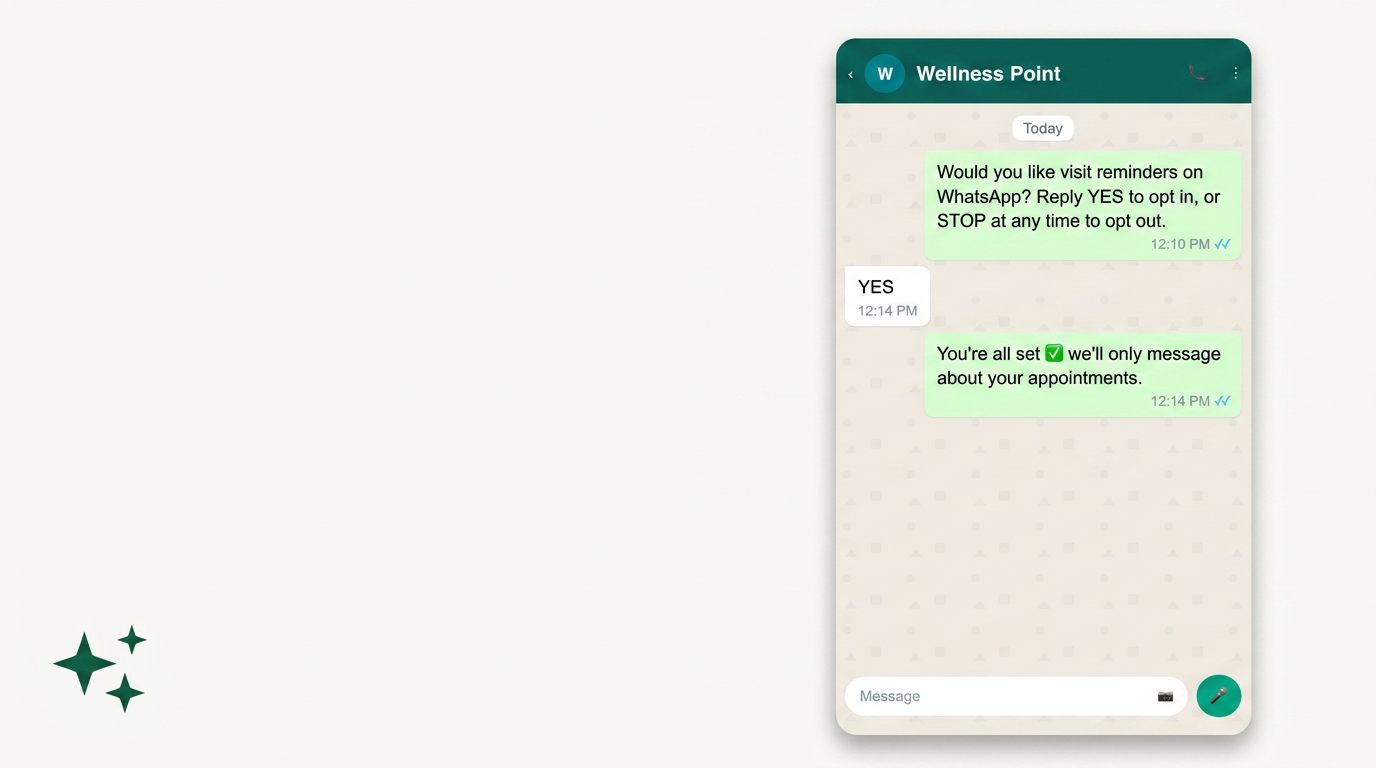
Shape matters more than cleverness. Every template goes out from the clinic's verified WhatsApp Business number, references the patient's history in general terms, and asks one question with a low answer cost. The ask is a yes or no with two concrete times attached, never a bare instruction to book now.
For the hygiene segments, that means naming the last visit period, naming the recall interval, and proposing two specific slots this week and next. For incomplete treatment plans, the message references the stage that was left open and offers a short review rather than the treatment itself, because the aim is to restart a clinical conversation rather than close a sale. For consultation-only patients, the honest move is to acknowledge that they came in some time ago and ask whether the concern they raised is still bothering them. For parents, one message covering two children with a single paired time block.
The rule we hold ourselves to: if the recipient has to think about scheduling logistics before they can reply, the message failed. Give them two slots and let them counter.
We also kill the discount reflex. The instinct is to lead with a percentage off. We push back, because discounting a lapsed patient trains the whole list to wait for the next discount and insults the ones who would have booked at full fee. Where an incentive is used, it is a bundled hygiene and check-up at a fixed transparent price, positioned as a recall package rather than a sale.
Consent and compliance, the part that gets skipped
This is a healthcare marketing campaign carrying patient information, and that changes the checklist. Before anything sends, we want to see three things. First, evidence of consent to be contacted for marketing or recall purposes, held per patient, with a date. Meta's own opt-in requirements for the WhatsApp Business Platform demand that a person actively agrees to receive messages from the named business, and the UAE Personal Data Protection Law (Federal Decree-Law No. 45 of 2021, summarised on the official UAE Government portal) prohibits processing personal data without the owner's consent outside narrowly defined cases. A phone number collected for appointment confirmations is not automatically a marketing permission, and treating it as one is how clinics end up explaining themselves. Second, a clean opt-out path in every message, which the same Meta guidance requires businesses to honour, and a mechanism that writes the opt-out straight back into the practice management software rather than into a spreadsheet someone maintains by hand. Third, message content that never states clinical detail a family member reading over a shoulder should not see. Reference the recall interval rather than the diagnosis, and remember that healthcare data in the UAE carries its own statute, Federal Law No. 2 of 2019 on ICT in healthcare, which reaches clinics in free zones too.
Add one more discipline. Conversations that touch clinical advice, treatment suitability, or money owed belong with a human, on the record, inside the same thread. A system can format an answer well enough; the point is that a clinic should be able to show who said what.
Wiring it into the practice management software
A reactivation campaign that cannot see the diary is a mailing list with extra steps. The integration work is the difference between a patient replying yes and a patient replying yes and being booked ninety seconds later.
Three connections carry the weight. Availability has to read live from the diary, by provider and by appointment type, so proposed slots are real and hygiene time is not offered where a restorative block is needed. Booking has to write back into the same system, so the front desk never maintains a parallel schedule. And status has to write back too: contacted, replied, booked, declined, opted out, so the next campaign inherits an accurate list instead of repeating this one's work. Where a clinic's software has no usable interface, we build a controlled handoff to a coordinator instead of faking an integration, because a double booking on a Saturday morning does more damage than a slower reply ever will.
The replies are where the job actually lives. Within the first hour of a batch going out, inbound questions arrive about insurance coverage, evening availability, whether the same dentist is still there, whether a treatment is still needed. That volume buries a front desk that also has patients standing in front of it. An assistant connected to the diary absorbs the repetitive twenty questions and hands everything else over. The sequence behind the first message is what earns the money, and we have made that argument at length in the follow-up sequence piece, so we will leave it there.
Getting the front desk on side before go-live
We run short sessions with the clinic team before anything sends, and the software is the smallest part of them; the sessions are about the why. The reception team's honest fear is that automation is a prelude to reducing headcount, and pretending otherwise wastes everybody's afternoon. What changes the room is showing them the recall list they were asked to phone through between walk-ins and asking how much of it they were ever able to finish. Once they see the assistant is taking the task nobody could complete rather than the task they are good at, they start correcting the scripts themselves.
We are blunt about this because it decides outcomes. Staff who understand why the system helps them will train each other and cover its gaps. Staff who fear it will route around it quietly, take conversations onto personal phones, and the data rots inside a month. Change management is most of implementation success and it almost never receives a proportionate share of the budget.
What good looks like when the campaign runs
We have not found a published benchmark for WhatsApp dental reactivation that survives checking, so set expectations against your own data rather than against hope. The first clean, well-segmented batch is the baseline: its reply and booking rates are what every later segment gets measured against. A meaningful minority of the lapsed list coming back over a full campaign is a realistic outcome; any more precise number is a working assumption until your own results confirm it. Two things then matter more than the headline count of rebooked appointments.
The first is mix. Hygiene bookings fill chairs and stabilise the diary. Restarted treatment plans are where the revenue per chair hour lives. A campaign that produces only the former has worked partially, and the fix is almost always in the treatment-plan messaging, which needs a clinician's voice and more patience than the hygiene batch.
The second is cost per booked appointment against cost per acquired patient. That comparison is the number that settles arguments with a marketing agency, and it is the one reactivation tends to win, because acquiring a patient from cold costs a multiple of what recalling an existing one does. Track it per segment, because a segment can be profitable overall and still be the wrong place to spend the next campaign's effort.
One more output that is easy to overlook: the campaign tells you which records are dead. Numbers that fail, patients who confirm they have left the country, opt-outs. Count that as a win too, because a cleaned database stops costing you money to remind.
When a dental reactivation campaign backfires
Running this campaign badly is worse than never running it, so here is the case against everything above.
It fails outright if the reason patients left was the clinic
Reactivation assumes the lapse was passive. Sometimes it was not. If patients stopped coming because they were kept waiting, because a treatment coordinator pushed hard, because a crown failed and the handling was poor, then a WhatsApp campaign is a mass invitation for people to tell you so on a channel where your response time is visible to them. Before any reactivation project we ask a version of one question: is there anyone on this list you would rather not hear from? If the answer takes a while to arrive, fix the clinic first. A recall message to an unhappy patient is not marketing, it is a complaint generator with a delivery receipt.
The practices that should not do this at all
A single-chair clinic already running near capacity should not reactivate. It has nothing to sell, and the fastest way to destroy a recall list is to fill it with people you then push out four weeks. Same for a practice mid-way through replacing its principal dentist, where the trust being reactivated belongs to somebody who has left. Same for a clinic whose patient data lives in three systems and reconciles in none, because the campaign will message someone who was treated last Thursday, and that single error does more reputational damage than a long run of successful rebookings repairs. And a practice that cannot evidence consent to marketing contact should sort that out before the campaign rather than after the first complaint.
What high volume does to your number and your diary
Volume introduces failure modes that a small batch hides. High template volume from a number with little conversational history invites quality-rating trouble and, at worst, collides with the messaging limits Meta documents for the platform: a cap on how many unique users a number can message in a moving 24-hour period, starting as low as 250 contacts for a new business portfolio. Hit that ceiling and the operational messages you cannot afford to lose, meaning appointment confirmations, get caught in the same throttle. So sends are staged, safe segments go first, and block and report rates are watched before the aggressive segments move. Platform economics matter here too, and campaigns costed on old assumptions get expensive quietly. We covered the policy shift separately; the relevant consequence for a clinic is that Meta's move to per-message pricing in July 2025 bills every delivered marketing template individually, which rewards tight segmentation and punishes anything resembling a blast.
The dental-specific failure at scale is different and worse. Reactivation creates demand in bursts, and dental capacity is not fungible. Two hundred people saying yes in a week produces a diary where hygiene overflows into slots the restorative list needed, where one provider is triple-booked and another sits idle, and where the patients you most wanted back (the incomplete treatment plans) get offered a four-week wait because the easy bookings arrived first. The fix is capacity-aware sending: cap daily replies at the diary's real absorption rate, reserve treatment-plan slots before the hygiene batch goes out, and release segments in the order of value rather than the order of ease.
The one-off trap
The structural weakness is that a dormant list is a stock rather than a flow. You can harvest an eighteen-month backlog once. Run the same campaign next quarter against the same names and results fall away, because the willing already came back. Clinics that keep winning convert the campaign into a permanent recall cadence: every patient leaves with a next visit booked or an automated nudge dated, so the dormant list never grows to this size again. Treat the big campaign as demolition and the recall automation as the building you put up afterwards.
What generalises beyond dentistry
Almost all of it. The structure holds for any practice with a treatment history and a recall interval: physiotherapy, dermatology, aesthetics, optometry, veterinary. It holds for salons with a colour cycle. It holds, with stricter tone requirements and more careful sequencing, in mental health practice automation, where continuity of care is the entire product.
The transferable rules are short. Segment by history and lapse length before you write a word. Send on WhatsApp, because that is where the answer comes from. Ask a question with a one-tap answer instead of demanding a booking. Route clinical and financial replies to a human immediately. Confirm you have consent and can prove it. Have capacity before you create demand. Then install the recall cadence so you never need the big campaign twice.
Learnmind, the Dubai consultancy that builds WhatsApp automation and AI receptionists for service businesses, meets this pattern most often in reactivation work: the marketing problem turns out to be a database nobody was given enough hours to call.
What practice owners ask us
How do I reactivate lapsed dental patients over WhatsApp?
Clean and export your patient list, segment it by treatment history and length of lapse, then send targeted template messages from a verified WhatsApp Business API number offering two specific appointment times. Handle replies in-chat with a diary-connected assistant and escalate anything clinical or financial to a human immediately.
What response rate should a dental reactivation campaign get?
No published benchmark for WhatsApp dental reactivation stands up to citation, so build your own: send the cleanest segment first, record its reply and booking rates, and measure every later segment against that baseline. A meaningful minority of a lapsed list coming back is a realistic campaign outcome; results that collapse from batch to batch usually point to an unsegmented list or messages that ask for too much effort to answer.
Is WhatsApp reactivation cheaper than dental ads?
Usually, yes. Harvard Business Review puts the cost of acquiring a new customer at five to 25 times the cost of retaining an existing one, and reactivation sits on the cheap side of that gap because the patient already trusts the clinician. Measure cost per booked appointment against your paid-ads cost per acquired patient and let the numbers settle it.
Can I message my whole dental patient list on WhatsApp at once?
No. Meta's messaging limits cap how many unique users a business can message in a moving 24-hour period, with new business portfolios starting at just 250 contacts, and blasting the list is the quickest way to damage the quality rating your appointment confirmations depend on. Stage sends in batches, start with the safest segments, watch block and report rates, and contact only patients whose consent to marketing communication you can evidence.
Pull your lapsed-patient list this week, segment it by treatment history and length of lapse, and send the safest fifty a personal two-slot WhatsApp message before you spend another dirham on ads. Learnmind does the full build, diary integration, consent checks and permanent recall cadence included, for practices that want it done properly.